Turkey’s risk of being placed on the Grey List has been eliminated
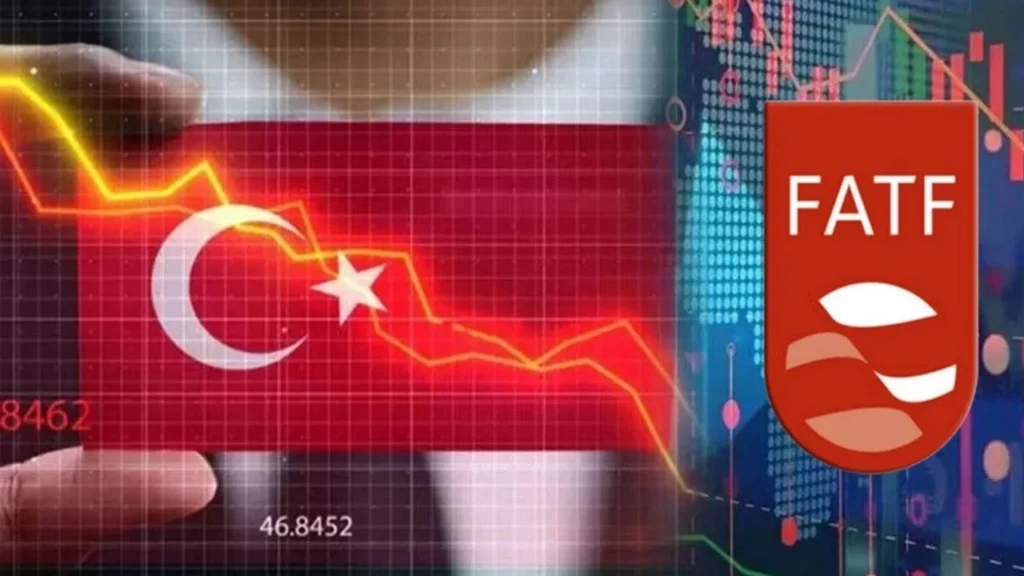
The fifth round of the Mutual Evaluation process conducted by the FATF regarding Turkey is nearing its final stage. Osman Dereli, former Chairman of MASAK, emphasized that Turkey has made significant progress in the areas of legislation and regulation, and stated that it is assessed that Turkey will not face the risk of being placed on the gray list provided no major shortcomings are identified.
Turkey, which had been placed on the gray list during the fourth round of evaluations—conducted as part of efforts to combat money laundering and the financing of terrorism—due to weaknesses in technical compliance and implementation effectiveness, was removed from this list in February 2024 following the work carried out.
The fifth round of the Mutual Evaluation process for Turkey, conducted by the Financial Action Task Force (FATF)—the body that sets international standards for combating financial crimes—is nearing its final stage. Once the fifth round of the Mutual Evaluation process, which began last November, is completed, it will become clear whether Turkey will be placed back on the grey list. Osman Dereli, former Chairman of the Financial Crimes Investigation Board (MASAK), told EKONOMİ that the likelihood of Turkey being placed back on the Grey List is very low.
Extensive consultations were held with sector representatives
The on-site inspection, one of the most critical stages of the Financial Action Task Force’s evaluation process, was conducted last November. The evaluation team held extensive meetings in Turkey with relevant public institutions, financial institutions, and other representatives from obligated sectors. The team gathered information by examining on-site the production of financial intelligence, investigation and prosecution processes, financial institutions’ compliance mechanisms, and inter-agency cooperation systems. The effectiveness assessment report to be prepared following these engagements will highlight Turkey’s operational capacity in combating money laundering and the financing of terrorism. Noting that the final report has not yet been completed, Osman Dereli, former Chairman of the Financial Crimes Investigation Board, stated that the initial impressions from the discussions were positive and that, provided no significant shortcomings are identified, Turkey is assessed as unlikely to face the risk of being placed on the gray list.
Significant progress compared to the previous assessment
Outlining the history of the process, Dereli recalled that Turkey was placed on the “Enhanced Monitoring List”—referred to as the Financial Action Task Force (FATF) “Grey List”—during the fourth round of the Mutual Evaluation process conducted by the FATF due to certain shortcomings in technical compliance and implementation effectiveness, and that it underwent an intensive review process. In this assessment, it was determined that out of forty technical recommendations, Turkey was compliant with eleven, largely compliant with seventeen, partially compliant with ten, and non-compliant with two. Regarding effectiveness indicators, while no high level of effectiveness was observed, significant deficiencies were identified in two areas, moderate deficiencies in seven areas, and low-level deficiencies in two areas.
Emphasizing that Turkey has implemented comprehensive improvements in both legislation and implementation following these results, Osman Dereli listed them as follows: “The powers of the Financial Crimes Investigation Board were expanded, and administrative fines were increased. The authority to freeze assets through administrative mechanisms against those committing the crime of terrorist financing was established. Money laundering units were established in courts, and dedicated investigations in this area have begun. As a result, Turkey has reached a higher level in the fight against money laundering and the financing of terrorism. Money laundering investigations have been added alongside ongoing criminal investigations. “The Financial Crimes Investigation Board has taken center stage in criminal investigations.” According to information provided by Dereli, significant progress has been made in the area of technical compliance as a result of the regulations implemented and improvements in operational capacity. In the latest assessments: while there are no non-compliant areas remaining, the results show compliance with fourteen recommendations, substantial compliance with twenty-five recommendations, and limited compliance with only one recommendation. Subsequently, Turkey was removed from the Grey List in February 2024.
“The FATF now focuses not only on legislation but also on implementation”
Osman Dereli’s assessments regarding the Fifth Round Evaluation, which began last November, and its potential outcomes are as follows:
The public and private sectors were evaluated together
As part of the Fifth Round evaluation, the Financial Action Task Force (FATF) delegation held meetings with numerous public institutions, including the Financial Crimes Investigation Board (MASAK), the Ministry of Justice, the Ministry of Foreign Affairs, the Ministry of Trade, the Banking Regulation and Supervision Agency, the Capital Markets Board, the Insurance and Private Pension Regulation and Supervision Agency, and the Tax Inspection Board. In addition, private-sector entities representing various sectors of the financial industry—such as banks, brokerage firms, insurance companies, payment institutions, and crypto-asset service providers—were also consulted during the assessment process. In Financial Action Task Force (FATF) evaluations regarding AML/CFT (Anti-Money Laundering and Counter-Terrorist Financing), the sustainable effectiveness of implementation is now the determining factor rather than legal regulations.
Turkey has made significant progress in three areas in recent years:
• Financial intelligence production and analysis capacity
• Investigation and prosecution processes
• Strengthening of the compliance culture in the financial sector
However, it is emphasized that FATF evaluations represent an ongoing process of continuous improvement. Experts stress that a sustainable compliance culture can only be achieved through the active participation not only of regulatory bodies but also of financial institutions and other obligated sectors.
The composition of the evaluation team is noteworthy
The composition of the fifth-round evaluation team could also contribute to a more balanced progression of the process. While the previous evaluation included experts from countries such as Canada, the United Kingdom, the United States, and India, the new team notably features experts from countries with regulatory frameworks more closely aligned with Turkey’s legal system.
All eyes are on the Financial Action Task Force General Assembly in June
Following the completion of the report prepared by the evaluation team, the final decision regarding Turkey is expected to be discussed at the Financial Action Task Force General Assembly in June. According to experts closely monitoring the process, given the legislative reforms, institutional capacity building, and operational improvements Turkey has implemented in recent years, a generally positive outcome of the fifth-round evaluation is seen as a strong possibility.
You can access this news via the link below.
https://www.ekonomim.com/ekonomi/turkiyenin-gri-liste-riski-ortadan-kalkti-haberi-883
